UK Wild Camping Laws
Where you may pitch a tent without asking, where you need permission, and what the Supreme Court decided about Dartmoor.
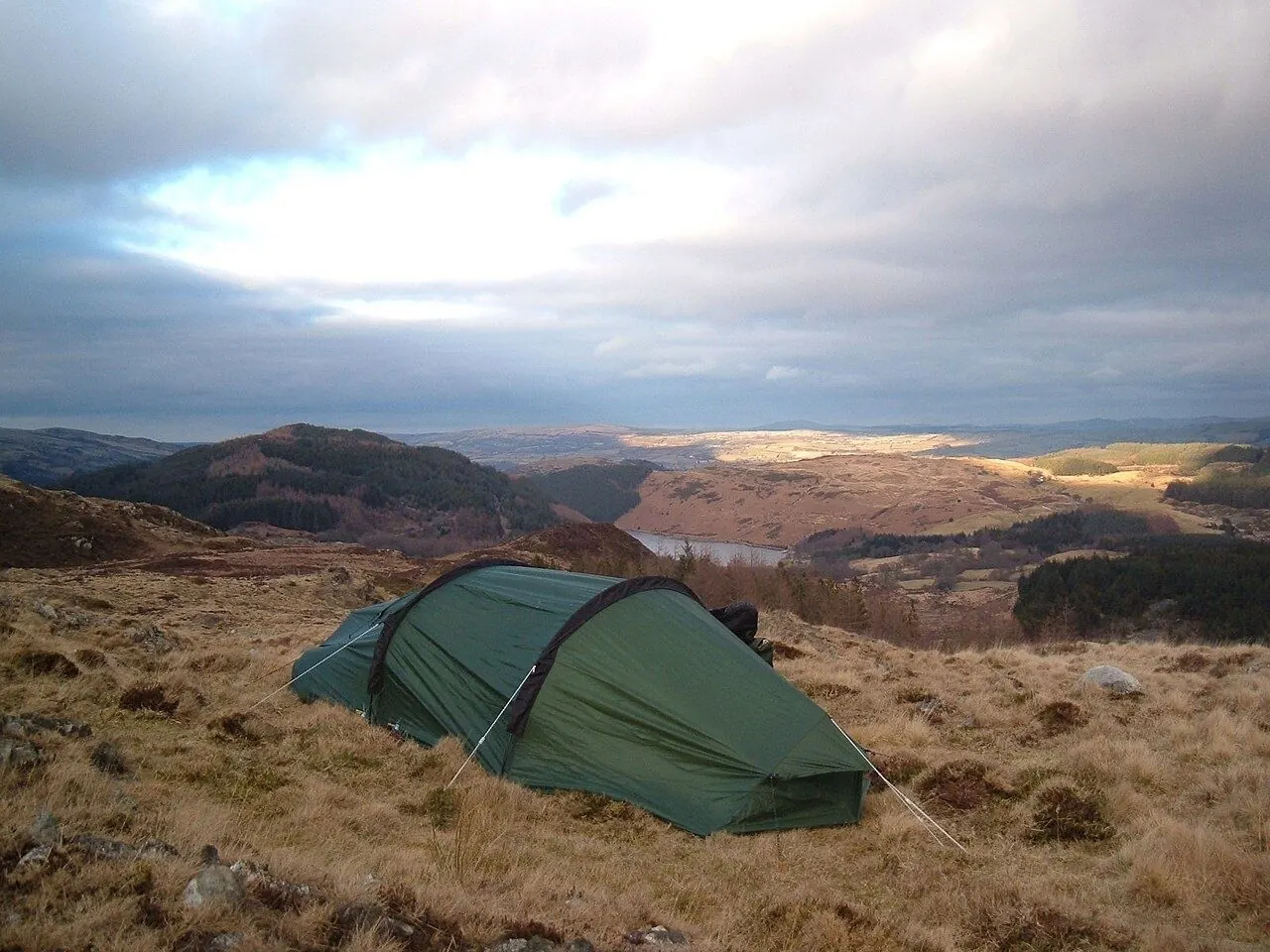
Scotland is the main legal exception: wild camping is allowed there under the Land Reform (Scotland) Act 2003, as long as it is done responsibly. In England and Wales you generally need the landowner's permission, except on the Dartmoor Commons, where the Supreme Court confirmed a public right to camp in 2025.
Scotland: a right of responsible access
In Scotland, wild camping is broadly allowed under the Land Reform (Scotland) Act 2003, which created a statutory right of responsible access to most land and inland water. The Scottish Outdoor Access Code says access rights extend to wild camping that is "lightweight, done in small numbers and only for two or three nights in any one place".
The Code asks campers to avoid enclosed fields of crops or farm animals, to keep well away from buildings, roads and historic structures, and to take extra care not to disturb deer stalking or grouse shooting. If you wish to camp close to a house or building, seek the owner's permission. Access rights do not cover motor vehicles, so sleeping in a car or campervan is not part of the right.
Local rules can narrow the right. Under the Camping Management Byelaws introduced in 2017, camping in the Camping Management Zones of Loch Lomond & The Trossachs National Park between March and September is only possible at campsites or with a permit. At the time of writing, permits are booked online for a small nightly fee; check the National Park Authority's website for current zones, dates and charges.
England and Wales: permission is the rule
In England and Wales, the Countryside and Rights of Way Act 2000 gives the public a right to walk on mapped open country and registered common land, but camping is excluded from that right. There is no general right to camp, so pitching a tent anywhere else needs the landowner's permission.
The Lake District has no special legal right either, but it has a long custom of discreet, high-level camping. The National Trust's guidance for its land there is to pitch only above the highest fell wall (roughly 400m), arrive late and move on at dawn, go elsewhere if two tents are already in your spot, never light fires or barbecues, and leave no trace, including human waste. It distinguishes this from fly camping, which it describes as illegal.
Dartmoor's exception
Dartmoor is the only place in England and Wales where wild camping is enshrined in law. The Dartmoor Commons Act 1985 gives the public a right of access to the commons on foot and on horseback for "open-air recreation". In 2023 the High Court ruled that this did not include camping, and the Court of Appeal reversed that decision later the same year. On 21 May 2025 the Supreme Court unanimously dismissed the landowners' appeal, holding that open-air recreation naturally includes camping.
The right remains subject to the Act and to the National Park Authority's byelaws. In practice that means backpack camping for one or two nights in the permitted areas of open moorland, out of sight of roads and settlements, carrying everything you need; check the Dartmoor National Park Authority's camping map before you go.
Wherever you camp, the practical standard is the same one the Scottish Code sets out: take away all your litter, remove all traces of your tent pitch and of any fire, and cause no pollution. Keep groups small, stay one or two nights, and when in doubt, ask the landowner.
Sources checked
- supremecourt.uk/cases/judgments/uksc-2023-0126
- outdooraccess-scotland.scot/sites/default/files/2018-09/Scottish%20Outdoor%20Access%20Code%20-%20Part%205%20Practical%20guide%20to%20access%20rights%20and%20responsibilities.pdf
- lochlomond-trossachs.org/things-to-do/camping/campingbyelaws
- nationaltrust.org.uk/visit/lake-district/wild-camping-in-the-lake-district